
 EN
EN
 English
  中文简体
中文简体  русский


Men's Heat Retainer Socks: Ultimate Warmth Guide
Content
The Science of Thermal Protection in Men's Socks
Men's heat retainer socks are engineered to trap body heat while effectively managing moisture, providing a critical layer of defense against cold temperatures. These specialized socks can maintain foot temperature up to 10 degrees warmer than standard cotton socks in freezing conditions. By utilizing advanced fiber technologies and strategic construction, they prevent the rapid heat loss that typically occurs through the extremities, ensuring comfort during outdoor work, winter sports, or daily commutes in harsh weather.
Core Materials Driving Thermal Efficiency
The effectiveness of heat retainer socks relies heavily on the specific materials used in their construction. Each fabric offers unique properties that contribute to overall warmth and performance.
Merino Wool and Synthetic Blends
Merino wool is widely regarded as the premier natural insulator due to its ability to trap air within its fibers. High-quality merino blends can retain warmth even when damp, a crucial feature for active use. When combined with synthetic fibers like acrylic or polyester, the socks gain enhanced durability and faster drying times. Acrylic, in particular, mimics the insulating properties of wool but is often lighter and more affordable.
Thermal Reflective Technologies
Modern heat retainer socks often incorporate metallic threads or reflective linings. These materials work by reflecting radiant body heat back toward the skin rather than allowing it to escape through the fabric. Socks with thermal reflective lining can improve heat retention efficiency by approximately 15-20%, making them ideal for extreme cold environments where every degree of warmth matters.
Design Features for Maximum Warmth
Beyond material composition, the physical design of men's heat retainer socks plays a pivotal role in their performance. Specific structural elements are incorporated to enhance insulation and comfort.
| Feature | Function | Benefit |
|---|---|---|
| Terry Loop Cushioning | Traps air pockets | Enhanced insulation and shock absorption |
| Seamless Toe Closure | Eliminates friction points | Prevents blisters and hot spots |
| Extended Cuff Height | Covers lower leg | Prevents cold air entry and retains core heat |
| Moisture-Wicking Zones | Moves sweat away | Keeps feet dry to prevent evaporative cooling |
Proper fit is essential for thermal efficiency. Socks that are too tight can restrict blood circulation, leading to colder feet, while loose socks may create air gaps that reduce insulation. Look for sizes that match your shoe dimensions closely without compressing the foot.
Selecting the Right Weight for Your Activity
Men's heat retainer socks come in various weights, each suited for different levels of activity and temperature ranges. Choosing the correct weight ensures you stay warm without overheating.
Lightweight for Active Use
Lightweight thermal socks are ideal for high-intensity activities like running or hiking in moderately cold weather. They provide a thin layer of insulation while prioritizing breathability and moisture management. These socks are best suited for temperatures between 20°F and 40°F (-6°C to 4°C), where excessive bulk could lead to overheating and sweat accumulation.
Heavyweight for Extreme Cold
For stationary activities or extreme cold below 20°F (-6°C), heavyweight heat retainer socks offer maximum protection. These socks feature thick terry cushioning throughout the foot and leg. While they provide superior warmth, they require boots with ample room to accommodate the extra bulk without restricting movement or circulation.
Maintenance Tips for Long-Term Performance
To ensure your men's heat retainer socks continue to perform effectively, proper care is essential. Incorrect washing methods can damage fibers and reduce thermal properties.
- Wash in cold or lukewarm water to preserve elastic integrity and fiber structure.
- Avoid using fabric softeners, as they coat fibers and inhibit moisture-wicking capabilities.
- Air dry flat whenever possible; if using a dryer, use the lowest heat setting to prevent shrinkage.
- Store in a cool, dry place away from direct sunlight to prevent fiber degradation.
Replace heat retainer socks every 6–12 months depending on frequency of use. Signs of wear include thinning fabric, loss of elasticity in the cuffs, or flattened cushioning that no longer provides adequate insulation.
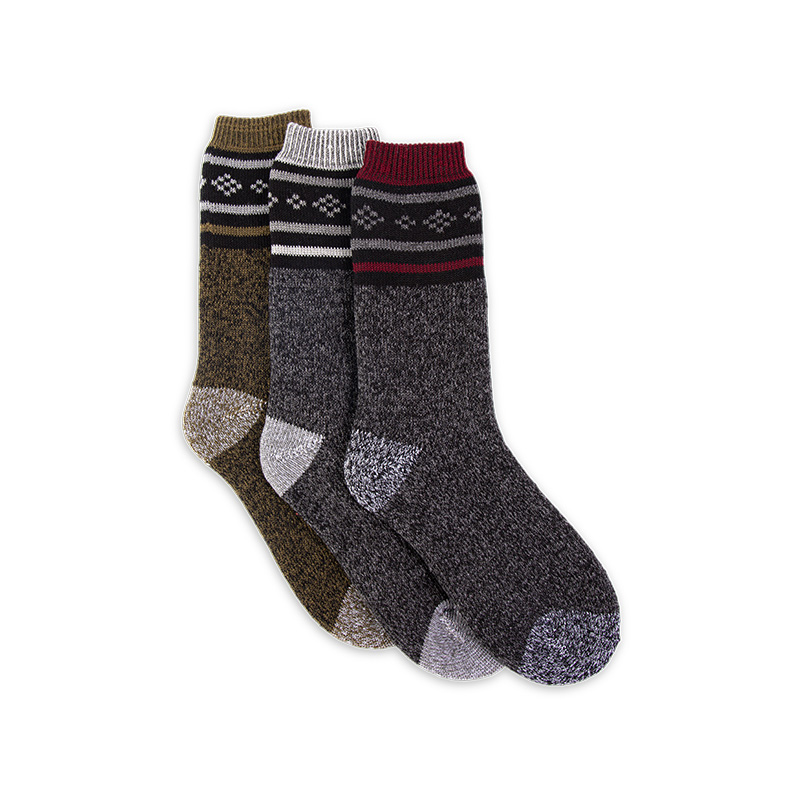
Our Main Products
To Contact When You Need Us!
 +86-15995363302
 No.58,Xiaowuxiang Rd,Yunting Town,Jiangyin City,Jiangsu,China.
Copyright @ Jiangsu Ruizhi Knitwear Co., Ltd. All Rights Reserved.
