 EN
EN
 English
  中文简体
中文简体  русский


Types of Socks: A Complete Guide by Length, Material & Use
Content
Sock Types at a Glance: Length, Material, and Purpose
Open a typical sock drawer and you'll find six or seven genuinely different products, even though every one of them reads as "just a sock" from across the room. A dress sock and a cabin sock share almost nothing in common once you look at the yarn, the knit density, or the height on the leg.
Most confusion around sock shopping comes from mixing up three separate classification systems. Length determines where the sock ends on your leg. Material determines how it feels, breathes, and holds up in the wash. Purpose determines the features built into the knit, from cushioning to heat retention. A single pair usually sits at the intersection of all three, which is why the same "type" of sock can look so different from one brand to the next.
Types of Socks by Length
Length is the easiest way to sort socks because you can see it at a glance. Four heights cover almost every pair on the market.
No-show and liner socks sit below the shoe line, often tucked just past the toes and heel. They're built to disappear inside loafers, boat shoes, or low sneakers, and the thinnest versions double as a liner layer under a thicker outer sock on long hikes.
Ankle socks, sometimes called quarter socks, rise just above the anklebone. They're the default choice for casual sneakers and everyday errands, offering a bit more coverage than a no-show without bunching inside a mid-top shoe.
Crew socks land mid-calf and remain the most common length overall, balancing coverage and breathability for both athletic and casual wear. Many factories, including our own crew, ankle and no-show styles for everyday wear, knit all three heights on the same machine platform, varying only the leg length and cuff tension.
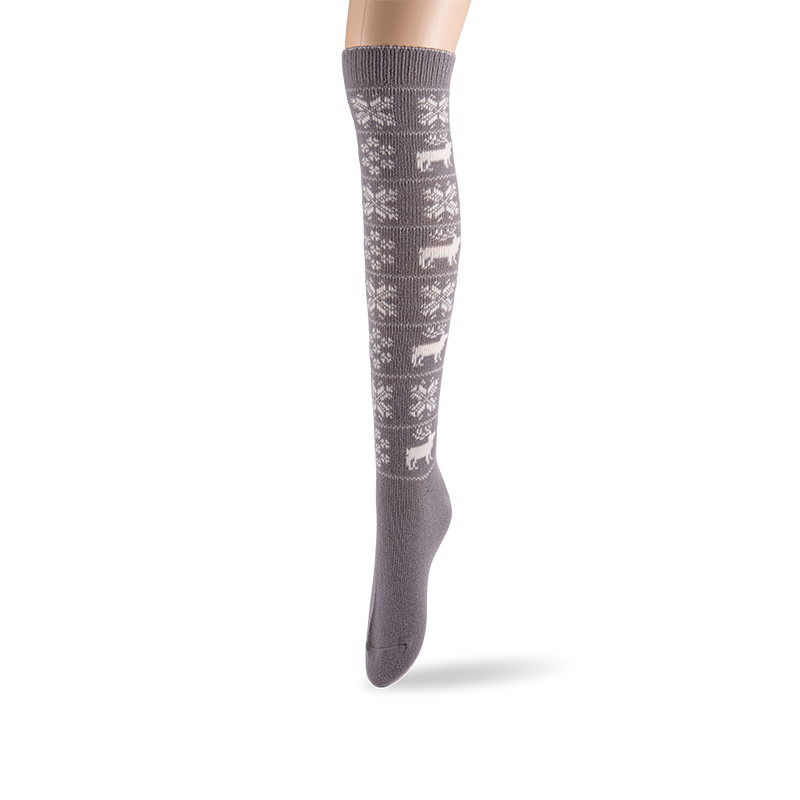
Knee-high and over-the-calf socks extend to just below the knee. They're standard with tall boots and cold-weather layering, and in dress-sock contexts they solve the classic problem of exposed skin when a man crosses his legs in a suit. Shoppers looking for that extra coverage often browse knee-high socks for extra coverage when boots or cold commutes are involved.
Types of Socks by Material
Fiber choice affects warmth, moisture handling, and durability more than length or shape ever will. Cotton remains the most familiar option: breathable, inexpensive, and soft against the skin, though it holds onto sweat rather than moving it away, which is why cotton socks can feel damp after a long day.
Merino wool solves that problem differently. The fiber absorbs moisture vapor into its core while keeping the surface relatively dry, and it resists odor-causing bacteria well enough that wearer trials comparing merino wool socks to synthetic socks have found merino preferred for lower odor both during wear and after washing, according to research from the wool industry's own testing body. That combination makes wool a common choice for socks worn multiple days between washes.
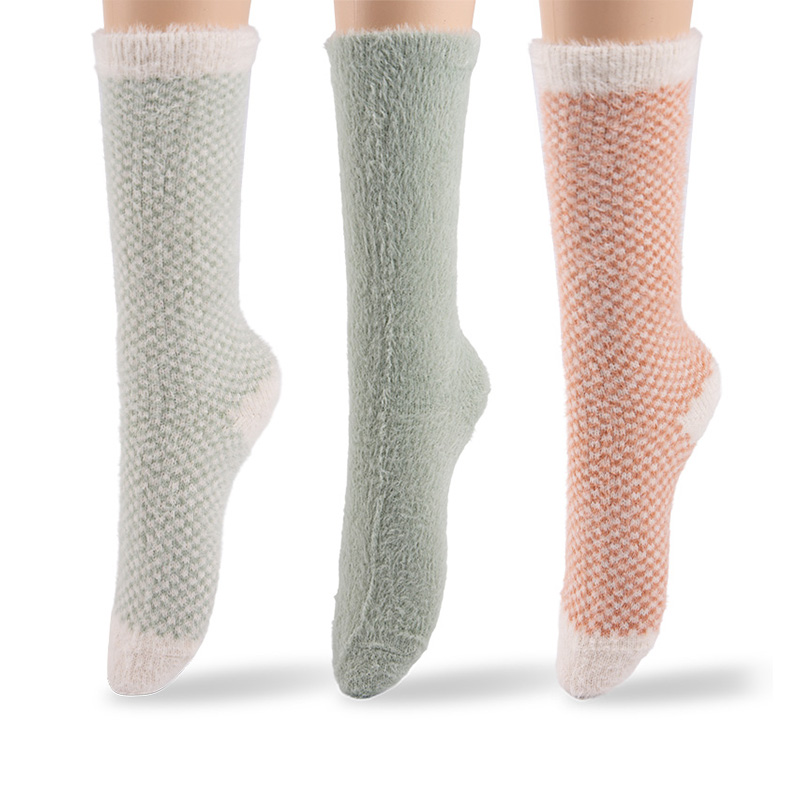
Synthetic blends, usually polyester, nylon, or acrylic mixed with a touch of spandex, trade some softness for consistency. They dry faster than natural fibers, resist shrinking, and hold their shape through hundreds of washes, which is why most athletic and value-priced socks lean synthetic. Brushed or terry-loop synthetic interiors, often acrylic or polyester fleece, add loft for insulation without the price of wool, and they show up heavily in cold-weather and lightweight seasonal lines alike, including lightweight spring and summer socks built from finer cotton-synthetic blends for warmer months.
| Material | Moisture Handling | Typical Use |
|---|---|---|
| Cotton | Absorbs but retains moisture | Casual, everyday wear |
| Merino wool | Wicks moisture, resists odor | All-day wear, multi-day trips |
| Synthetic blends | Fast-drying, low absorption | Athletic, value everyday socks |
| Brushed fleece/acrylic | Traps air for insulation | Cold-weather, thermal socks |
Types of Socks by Purpose
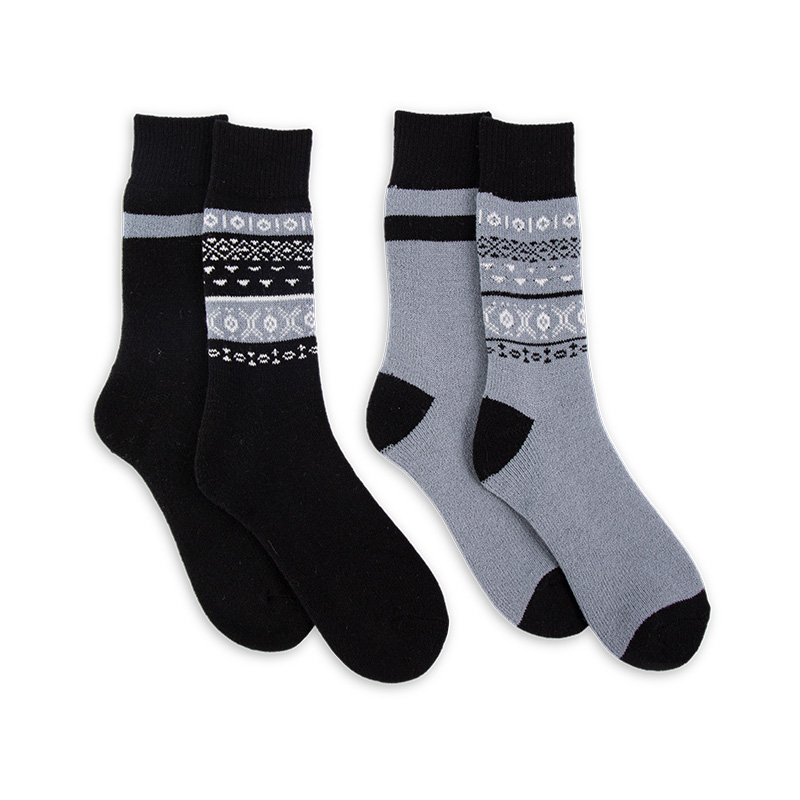
Once you know the length and material, purpose narrows things down to a specific job. Heat retainer, or thermal, socks are built around trapped-air insulation rather than thicker fabric alone. A dense terry-loop interior or brushed finish holds still air against the skin, and that layer does more to prevent heat loss than raw sock thickness does. Both women's heat retainer socks built for cold-weather warmth and men's heat retainer socks for winter durability rely on this same principle, adjusting loop density rather than just adding bulk.
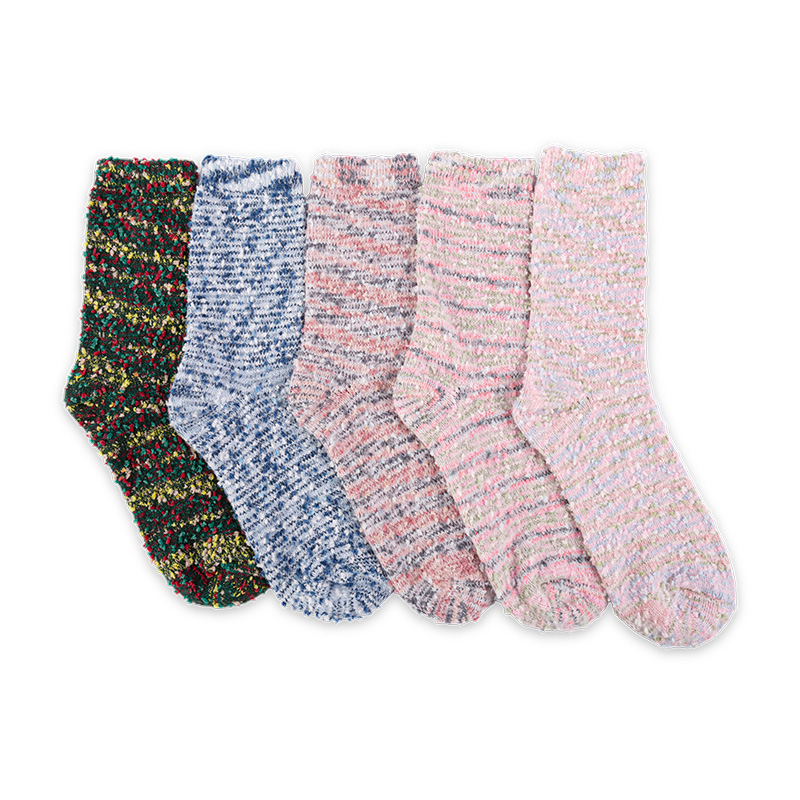
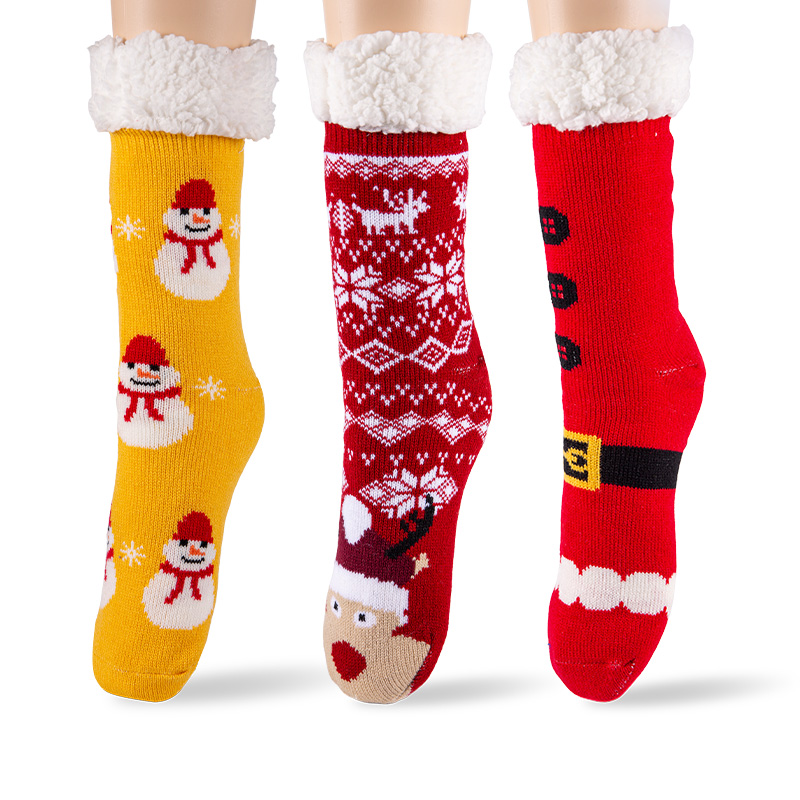
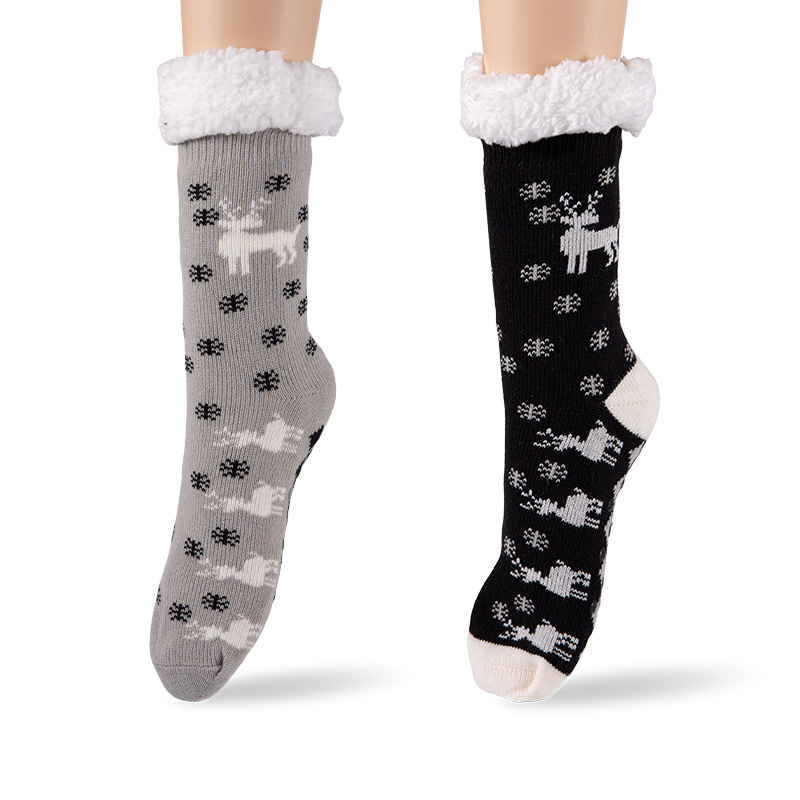
Cabin socks and slipper socks cover the at-home category, usually built with a sherpa-fleece lining and a non-slip grip on the sole. They're meant for lounging rather than walking distance, which is why the knit tends to be looser and the cuff wider than an outdoor sock. Shoppers furnishing a cold living room often compare cozy cabin socks for lounging at home against plush slipper socks for indoor comfort, since the two overlap but slipper socks add a grippier, more structured sole.
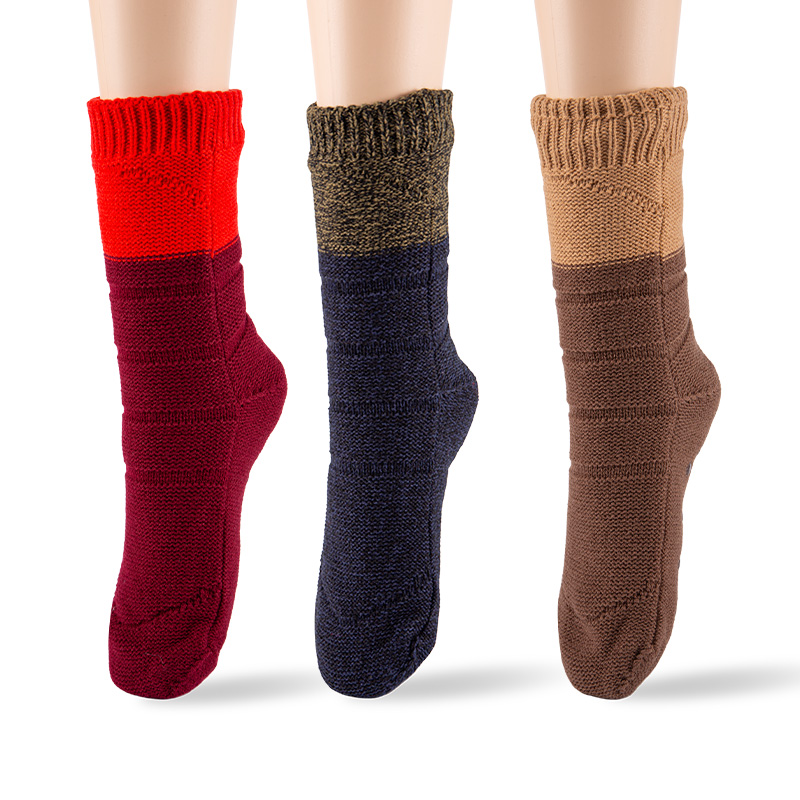
Boot socks solve a different problem: filling the extra volume inside a taller shoe while cushioning pressure points at the heel and shin. They're cut longer than a standard crew and knit thicker through the foot, which keeps them from sliding down inside boot shafts during a full day of wear. Our boot socks designed for extra cushioning use exactly this heavier foot-panel construction paired with a lighter leg for breathability.
Compression socks stand apart from every category above because their fit is engineered, not just their material. They apply graduated pressure that's tightest at the ankle and gradually loosens toward the calf, a structure originally developed to move blood back toward the heart. This graduated pressure is thought to reduce blood pooling by pushing blood from the surface veins into the deeper venous system, particularly when combined with muscle movement in the leg, according to a clinical review of compression stocking research. That's why they show up as often on long-haul flights as they do on marathon start lines.
How to Match Socks to Your Needs
Start with the activity, not the aesthetic. An office job spent mostly in dress shoes calls for a thin, knee-high or over-the-calf sock in cotton or a fine wool blend, since bulk under a trouser leg looks and feels wrong. A cold commute in boots is the opposite problem: you want a thicker boot sock with a reinforced foot, sized to fill the extra room inside the shaft without cutting off circulation.
Home environments reward comfort over performance. Cabin and slipper socks with a sherpa lining and grip sole make sense for hardwood floors in winter, while a lighter cotton-blend crew sock is plenty for a warm apartment. If boots are part of that rotation, it's worth browsing the fit and cushioning differences across our full women's boot sock lineup before settling on a single pair for the season.
None of these categories are mutually exclusive. A single closet can reasonably hold no-show cotton socks for sneakers, merino crew socks for hiking, thermal cabin socks for winter evenings, and a pair of compression socks reserved for long flights. Matching the length, material, and purpose to the moment is really the whole system, and once you see socks through that lens, the drawer stops looking so random.
Our Main Products
To Contact When You Need Us!

 +86-15995363302

 No.58, Xiaowuxiang Rd, Yunting Town, Jiangyin City, Jiangsu, China.
Copyright @ Jiangsu Ruizhi Knitwear Co., Ltd. All Rights Reserved.
